My Brother Is an Some Autism Embroidery Design
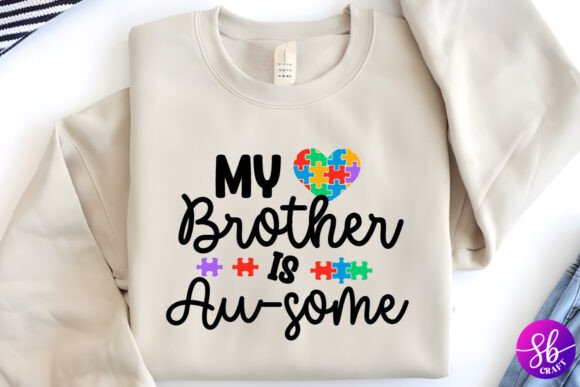
In my work, a design file arrives on my screen with a simple title and I immediately start visualizing the stitch path. With My Brother is an Some, Autism Shirt Svg, the visualization is clear and emotionally resonant. This isn't just a graphic; it's a statement waiting to be made tangible through thread. The first impression is one of gentle pride and direct, heartfelt communication. The layout suggests a straightforward, centered application, with a typographic style that feels modern yet warm. The personality is quietly confident, perfect for projects that speak from a personal place.
The Natural Habitat for This Design
Where does a design like this belong? I picture it immediately on a soft, cotton-rich sweatshirt, perhaps for a sibling gift. But its utility stretches much further. It’s a strong candidate for a tote bag used for daily outings, making the message part of a routine. Imagine it on a neatly embroidered patch, which can then be applied to a backpack or a hat. I’ve seen similar themes work beautifully on pillow covers in a supportive home environment, or on the corner of a cozy blanket. For small business owners and crafters focusing on personalized gifts, this design is a ready-made asset for creating meaningful, boutique-level merchandise.
Visual Appeal and Customer Connection
The true test of any embroidery file is how it translates from screen to fabric. My Brother is an Some, Autism Shirt Svg, by its nature, relies on clean lettering and a concise message. This means stitching clarity is paramount. When executed well on a suitable fabric with proper stabilizer, it projects a professionalism that builds customer trust. For a handmade product, this clean execution enhances the perceived value. It feels giftable—not flashy, but deeply considered. For an Etsy seller or creative entrepreneur, offering this on a high-quality item like a premium tee or an organic cotton apron can align perfectly with a brand centered on empathy and awareness.
Navigating Real-World Embroidery Scenarios
Let’s walk through a real case. A client requests a custom embroidered tote bag for a sibling’s birthday. They’ve provided this design. My first step is always a test on scrap fabric of similar weight. Here, I’d pay close attention to the lettering, especially the smaller text. The phrase “My brother is an some” has a certain cadence; ensuring each word remains distinct after stitching is key. I’d check thread color contrast—a classic navy or deep green on a light linen bag, or perhaps a soft white on a heather grey sweatshirt. The stitch density for the fill areas needs to be balanced; too dense on a thin fabric like a standard t-shirt could cause puckering, while too light might not hold up on a textured fabric like a canvas bag.
This design would shine on stable, medium-weight fabrics: sweatshirts, tote bags, pillow covers, and kitchen towels. It’s also suitable for baby embroidery on romper backs or blanket corners, provided the fabric isn’t too stretchy. For caps or curved surfaces, the layout would need careful positioning to keep the message readable along the curve.
Where to Proceed with Caution
Some applications require extra forethought. On very small hoop sizes, the details might become cramped. Embroidering on dark fabric demands bright, opaque thread choices and possibly a different stabilizer approach to ensure the text pops. Thin, stretchy jersey for t-shirts is doable, but requires excellent stabilizer and possibly a lighter stitch setting to preserve fabric integrity. If considering it for products that undergo frequent washing, like everyday apparel, recommending a robust thread like polyester and securing all stitches firmly becomes part of the service.
A Designer’s Practical Notes
Before committing this to a final finished product, my checklist is practical. Test, test, test. Run the design on both light and dark scrap fabric. Review the small details in a black and white mockup to assess clarity without color bias. Always use the proper stabilizer for your chosen fabric—for a crisp design like this, that step is non-negotiable. Crucially, confirm the licensing terms for this digital embroidery file. Is it cleared for commercial use, allowing you to sell the embroidered tote bags or sweatshirts in your small shop? Or is it for personal projects only? This verification is essential for any craft business or apparel decorator.
The design, as a digital product itself in the Graphics category, is a versatile asset. Its value in the Crafts world lies in its adaptability. It can be scaled for a large back-of-sweatshirt statement or minimized for a discreet patch. This scalability makes it a useful file for a wide range of embroidery projects, from holiday gifts for a loved one to consistent merchandise for an awareness-focused boutique.
The Final Stitch: Professionalism and Heart
In the end, My Brother is an Some, Autism Shirt Svg succeeds by blending straightforward execution with emotional depth. For the maker, it’s a reliable design that, when handled with professional embroidery techniques, yields a clean, lasting result. For the recipient or customer, it’s a visible token of recognition and pride. It reminds us that in the world of custom apparel and personalized gifts, the simplest messages, rendered with care and quality materials, often carry the greatest weight. As a designer reviewing it for real project use, I see its place clearly: on well-made items, stitched with intention, ready to be worn, carried, and shared.